
How South-South cooperation is helping São Domingos tackle its housing challenges
In São Domingos, a municipality of around 14,000 people in Cabo Verde, many families build or expand their homes themselves, often without technical guidance. Homes may grow incrementally as families’ needs and resources change, but this can also lead to structural and other problems over time.
For architect and urban planner Marco Aurélio Furtado, who grew up in São Domingos and now works for the municipality, improving housing is closely connected to improving people’s wider opportunities.
“People here are resilient and hardworking. There is a widespread belief that anyone, regardless of income, can build a home for themselves, even with very limited means,” he says.
As Director of the Technical Office of the Municipal Council of São Domingos, Marco oversees work on urban planning, sanitation, infrastructure, public spaces and housing. He also provides technical assistance to low-income families, supporting them with project design, budgeting and small-scale improvements such as roof repairs and home extensions.
His own interest in architecture began at home. One of four siblings, Marco grew up watching his parents gradually expand the family home, which had become too small for six people. The experience sparked his desire to study architecture and urban planning.
In 2008, he moved to Brazil to study at the Federal University of Minas Gerais in Belo Horizonte. Five years later, he returned to Cabo Verde and eventually joined the Municipal Council of São Domingos in 2020.
The connection between the two countries remained strong.
“For students in Cabo Verde, the dream was always to study either in Europe or in Brazil – but for me, it was always Brazil, because of how warm and welcoming people are,” he notes.
“The connection we share with Brazil is remarkable. Brazilians are not always fully aware of it, but there is a very direct cultural bond between us.”
Turning exchange into local housing action
That connection took on a new dimension in 2024 through Urban Symmetry, a South-South cooperation programme led by the Brazilian Cooperation Agency of the Ministry of Foreign Affairs, in partnership with UN-Habitat and Cabo Verde’s Ministry of Infrastructure, Territorial Planning and Housing.
The programme was designed to strengthen housing and urban policies in Cabo Verde by bringing Brazilian and Cabo Verdean institutions and municipalities together to exchange experience and develop practical approaches to local housing challenges.
UN-Habitat supported the cooperation by helping connect the participating institutions, facilitate the exchange of knowledge and provide technical support to the municipalities as they worked to translate lessons from the exchange into local housing planning.
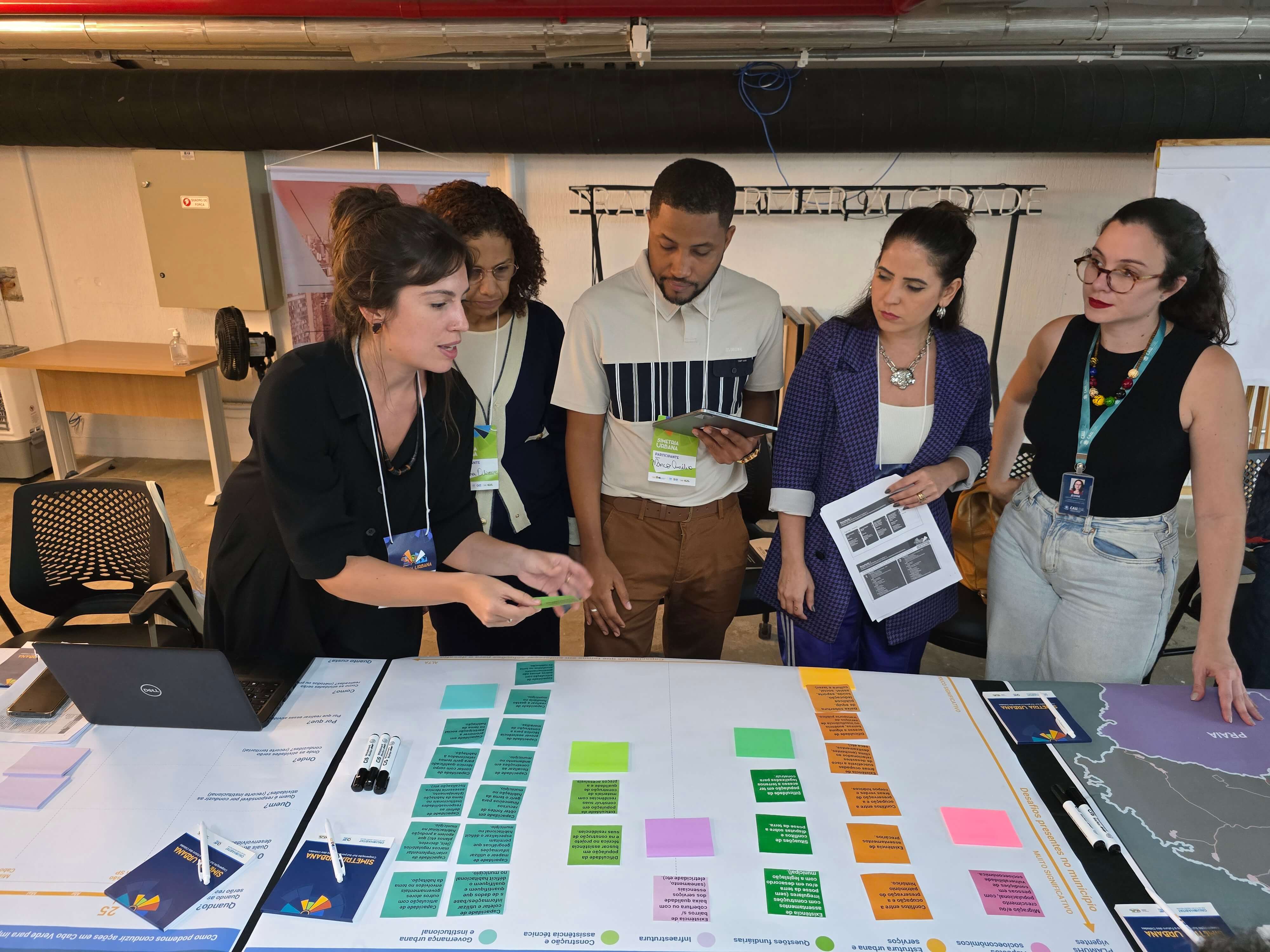
Cabo Verdean and Brazilian teams exchange experiences, share perspectives and explore common housing challenges through the Urban Symmetry South-South Cooperation Programme. © UN-Habitat/Guilherme Justino
For São Domingos, this process led to one of the programme’s most concrete outcomes: the development of a Municipal Housing Plan.
The plan provides a framework for understanding local housing needs and setting out actions to address them. It is intended to help the municipality move from addressing individual housing problems to taking a more systematic approach to housing, including issues such as land regularization and technical assistance for improving housing conditions.
Marco followed the initiative from its beginning. In July 2024, he took part in the first mission to Cabo Verde, which helped define the scope of the cooperation. In March 2025, he returned to Brazil for the first time in 12 years as part of a Cabo Verdean delegation visiting municipalities in São Paulo.
The delegation explored approaches to housing planning, social support services, condominium management and Technical Assistance for Social Housing.
“I had wanted to return to Brazil for many years, so it was a great honour. Visiting projects in different municipalities was the highlight of the experience. In my view, Brazil has one of the best housing policies in the world because it is so well structured. What really impressed me was the people’s ability to mobilise around so many different initiatives and contexts – across neighbourhoods, municipalities, quilombola communities and collective self-build housing projects,” he says.
During the visit, he also presented the reality of his own municipality. “It was a genuine exchange, with both sides learning from practices we have already implemented and others we still need to refine.”
A plan for São Domingos
Back in Cabo Verde, the exchange continued through technical sessions supporting São Domingos and São Miguel. Between April and December, Marco participated in all the sessions and closely followed the development of the Municipal Housing Plan.
The plan was finalised in December and is now being refined. It will undergo broad public consultation across the municipality before being formally approved and adopted as a permanent planning instrument for São Domingos.
The plan provides a foundation for tackling some of São Domingos’ longstanding housing challenges, including land regularization and technical assistance to improve housing conditions. It also gives the municipality a framework for bringing housing more systematically into local planning and discussions with the national government.
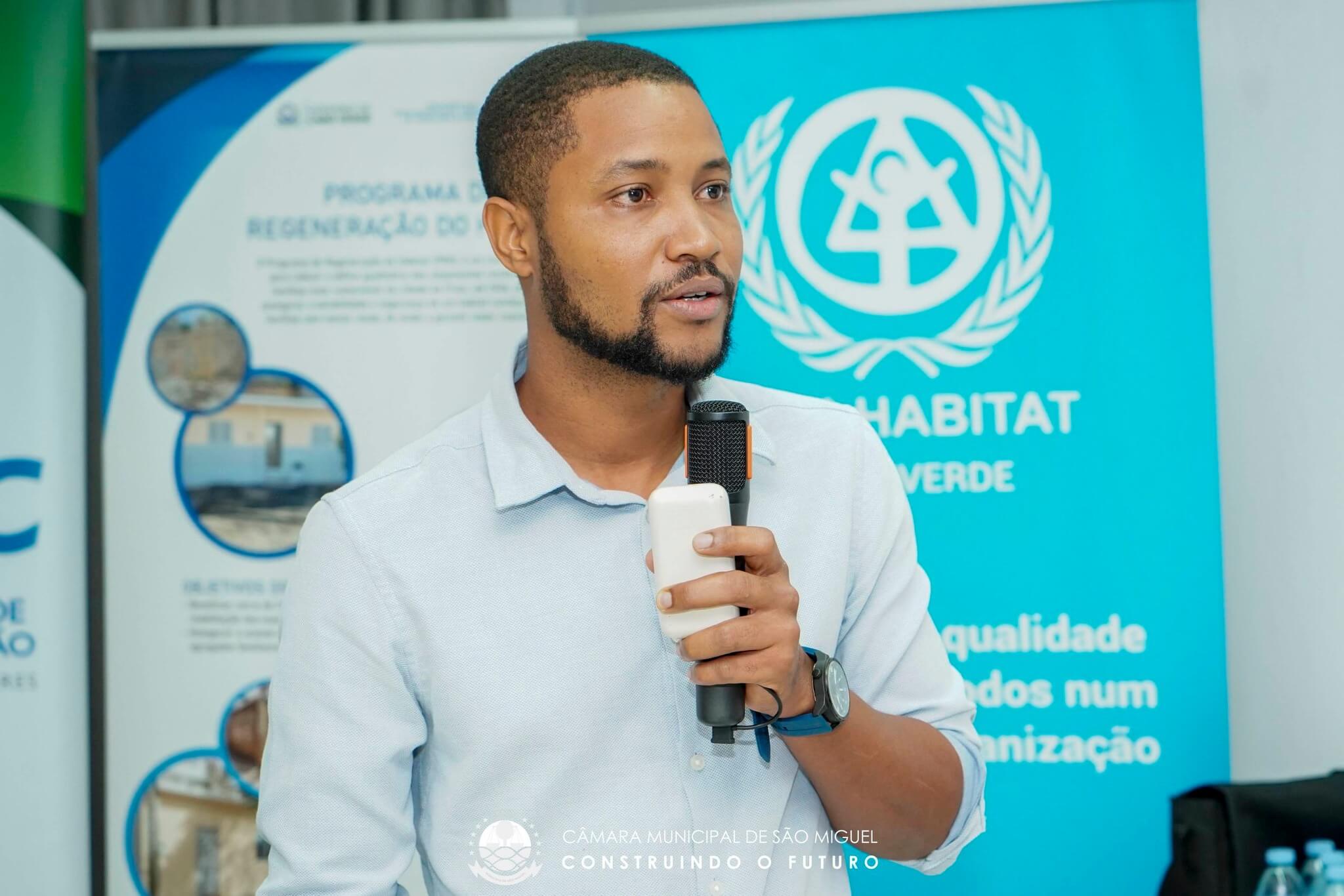
Marco Aurélio presents local housing challenges during the second mission to Cabo Verde, highlighting the realities and priorities shaping the municipality’s housing agenda. © City of São Miguel
“For the first time, the municipality of São Domingos is seriously discussing housing together with the national government. We have many housing-related problems that still need to be tackled, and when we address housing, we solve 50% of the municipality’s problems – because everything starts with housing. When someone has decent housing, they have the foundation to pursue many other opportunities in life.”
The cooperation has also created space for Cabo Verde to share its own experience while learning from other countries. Marco hopes similar exchanges will continue.
“Everything I am today is the result of Brazilian cooperation with Cabo Verde. I studied at a Brazilian university, where I gained all my professional training. I returned home to contribute to my country and my municipality; then I returned to Brazil as part of such an important mission and received further training before coming back again. Through this process, I was able to contribute to an instrument developed not by Brazilians, but with Brazilians – an instrument that we ourselves created, with a 100 per cent Cabo Verdean DNA. It fills me with gratitude, pride and joy, and I am deeply thankful for the opportunity made possible through Brazilian cooperation.”
Cover photo: Marco Aurélio during a technical visit to settlements in Santos, São Paulo, Brazil, organized by the Urban Symmetry South-South Cooperation programme through initiatives supported by CAU/SP. © UN-Habitat/Guilherme Justino
Legal Disclaimer:
EIN Presswire provides this news content "as is" without warranty of any kind. We do not accept any responsibility or liability for the accuracy, content, images, videos, licenses, completeness, legality, or reliability of the information contained in this article. If you have any complaints or copyright issues related to this article, kindly contact the author above.
