LASER World of PHOTONICS CHINA Guide to Low Distortion Lens Sourcing with CHANCCTV Custom Support
FUZHOU, FUJIAN, CHINA, August 13, 2026 /EINPresswire.com/ -- The LASER World of PHOTONICS CHINA exhibition brings together optical engineers and procurement teams seeking precise industrial imaging solutions. In industrial scanning and machine vision, system reliability relies heavily on mapping real-world geometric relationships stably onto a sensor. Even minor lens distortion directly compromises dimensional measurement, barcode recognition, and package inspection accuracy, leading to false rejects. As a dedicated China Low Distortion Lens Supplier, CHANCCTV addresses these challenges by providing specialized products and custom support centered around distortion control, sensor compatibility, focal length, and working distance.
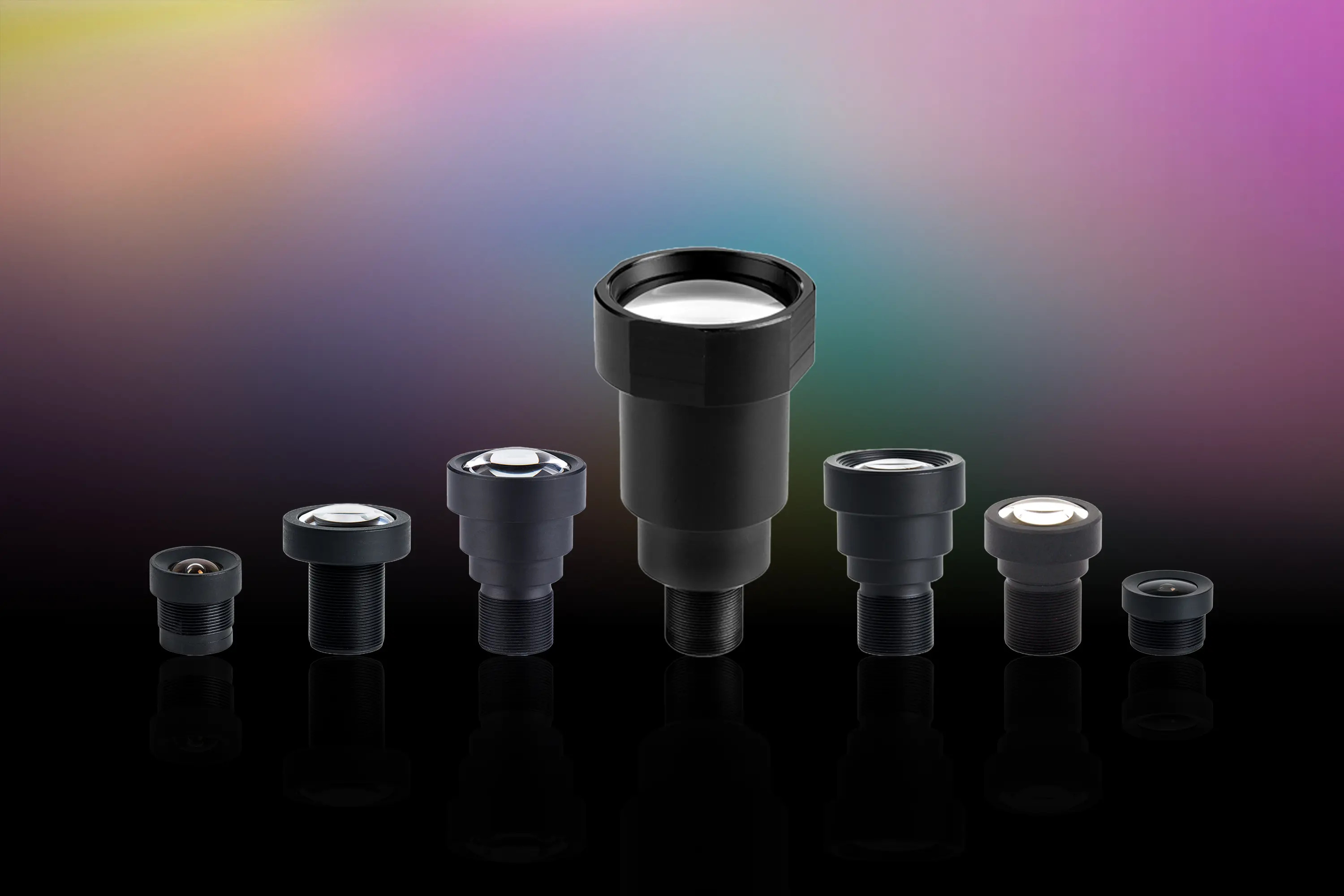
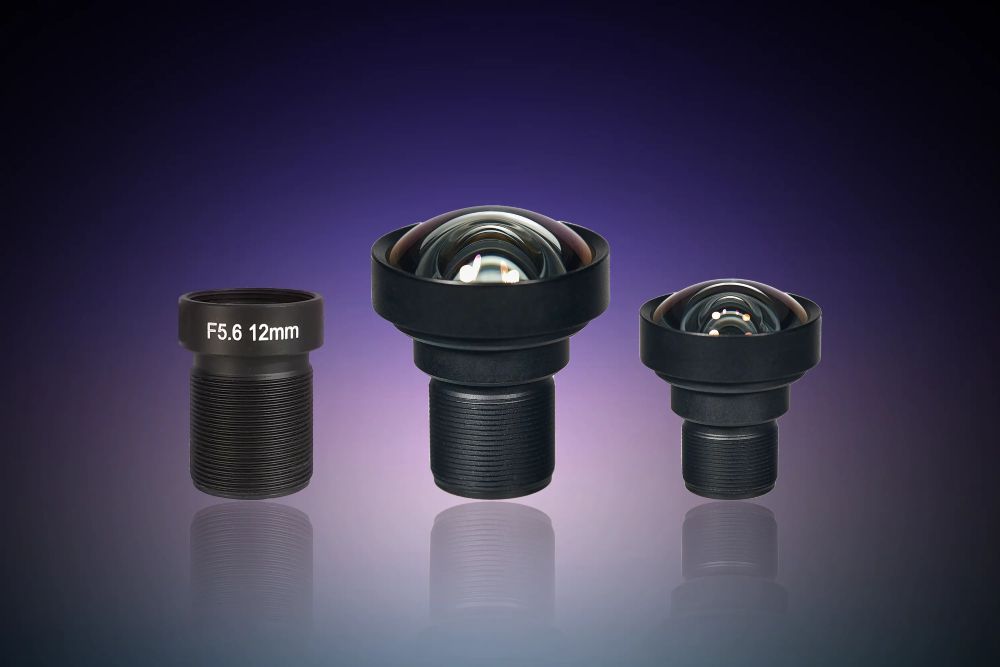
The low distortion lens portfolio from Fuzhou ChuangAn Optics Co., Ltd. covers multiple M12 sensor formats and focal lengths, engineered for critical tasks like dimensional measurement, barcode and QR recognition, package contour measurement, and label inspection. Sourcing communication at LASER World of PHOTONICS CHINA must begin with target distortion limits, required field of view, working distance, and lighting conditions. By connecting robust product specifications, scanning application data, and prototype validation, CHANCCTV ensures that the procurement challenges discussed on the expo floor translate into verifiable optical specifications.
Why Distortion Control Matters in Industrial Imaging
Low distortion in industrial imaging is not merely a visual preference; it is the fundamental optical condition determining whether dimensional measurement, barcode recognition, package contour detection, and label inspection maintain geometric consistency. In precision machine vision, an optical frontend must capture reality without warping the frame edges. When image edges stretch or bend, it artificially amplifies measurement errors, forcing the inspection system to rely on aggressive software compensation. This increases the calibration burden on backend algorithms and slows down processing speeds.
Therefore, lens distortion cannot be treated as an isolated specification; it must be evaluated alongside working distance, field of view, and sensor resolution to guarantee a reliable data basis. The Fuzhou ChuangAn Optics Co., Ltd. low distortion lens portfolio covers multiple M12 sensor formats and focal lengths, providing configuration flexibility for scanning and inspection projects ranging from close-distance component recognition to longer focal length imaging.
Key specification capabilities include:
1/1.7-inch format lenses: Delivering 8 MP resolution paired with a versatile 3–5.7 mm focal range for detailed inspection.
2/3-inch format lenses: Offering 8 MP resolution alongside a 6–50 mm focal range to accommodate varying installation distances.
For engineers evaluating equipment, directly correlating distortion control with measurement accuracy and code recognition reliability ensures the inspection system is built on a solid optical foundation.
Match Sensor, Focal Length, and Working Distance
The key to selecting a highly effective low distortion lens is not simply chasing a single high-resolution number. Instead, it involves ensuring that the sensor size, pixel count, focal length, aperture, and working distance form a complete, optimized imaging chain. An imbalance in any of these parameters can degrade the final image, regardless of the camera sensor's capabilities.
The M12 product group from CHANCCTV accommodates multiple sensor formats, allowing integrators to seamlessly match the lens to their industrial camera. The scanning lens series includes close-working-distance options designed for tight integration, spanning mount ranges such as M5.5–M12 and M8/M12 interfaces. When designing an inspection station, the target object's physical dimensions and the required field of view dictate the optimal focal length. Simultaneously, the ambient illumination environment and the scanned object's reflective characteristics determine the necessary aperture settings and optical filter configurations.
Ultimately, the stated distortion specification must be validated under actual working distances and algorithm calibration conditions. By balancing a multi-sensor format approach with versatile M12 mounts and close-working-distance scanning options, Fuzhou ChuangAn Optics Co., Ltd. allows buyers to align the optical hardware precisely with their physical system architecture.
Industrial Scanning Applications for Low Distortion Lenses
The core value of low distortion lenses is concentrated in industrial tasks that demand perfectly stable geometric relationships across the entire image field. These critical scanning and logistics applications include precise dimensional measurement, high-speed barcode and QR code recognition, package contour and volume measurement, and label and seal inspection.
In practical scenarios, barcode and QR recognition require edge lines and module proportions to remain sharp and geometrically true, even at the image corners. If a lens introduces heavy barrel or pincushion distortion, the software may fail to decode the symbol, causing logistics bottlenecks. Similarly, package and label inspection rely on the image coordinates mapping stably to physical dimensions, checking positions and completeness with sub-millimeter accuracy.
In these advanced contexts, the lens transforms from a simple imaging component into the primary measurement input for the entire inspection system. Its optical performance directly impacts the first-pass recognition rate, false rejection control, and the overall equipment debugging cycle. A reliable low distortion foundation from CHANCCTV significantly reduces software overhead and ensures that rigorous procurement standards and measurement accuracy requirements are met consistently.
Custom Support from Prototype to Volume Order
For B2B buyers and systems integrators, the procurement value of custom support lies in rapid parameter convergence and reliable prototype validation. Standard lens models are typically deployed first in the testing phase to verify basic sensor compatibility and confirm the field of view. From there, the engineering process moves into targeted adjustments based on specific project requirements for distortion limits, optical filter integration, housing dimensions, or ruggedized mechanical interfaces.
Since its establishment in 2010, CHANCCTV has built a strong historical foundation of optical product development and manufacturing support. They publicly support a highly flexible one-piece sample policy with no minimum order quantity (MOQ) for standard testing, allowing engineers to prove the concept without heavy upfront commitments. The lead time for stock-lens samples is approximately three days, keeping R&D cycles short. For production rollouts, the published lead time for a volume order of 1,000 lenses is 15–20 days. These clear timelines provide a highly reliable schedule for pilot production and batch manufacturing planning.
Visual evidence from the processing plant and inspection workshop further supports the supplier evaluation process by demonstrating concrete production capacity and structured quality management environments. However, Fuzhou ChuangAn Optics Co., Ltd. emphasizes that the final project standards are always anchored in the physical sample testing reports and the specification documents confirmed by both parties.
A LASER World of PHOTONICS CHINA Sourcing Checklist
Effective procurement communication at industry events like LASER World of PHOTONICS CHINA requires translating broad low distortion lens needs into verifiable, structured engineering parameters. To maximize supplier meetings, buyers should bring a comprehensive checklist that includes the exact sensor model, pixel size, target object size, designated working distance, required field of view, maximum allowable target distortion, illumination conditions, optical filter requirements, and expected production quantity.
Providing this complete set of inputs drastically reduces the information gap between standard model screening, initial optical evaluation, and the final prototype iteration. It also prevents procurement teams from making narrow decisions based solely on focal length or megapixel figures without considering the full optical geometry.
The detailed product pages, scanning application data, and custom support frameworks provided by Fuzhou ChuangAn Optics Co., Ltd. establish a solid baseline for preliminary supplier evaluation. For the final procurement decision, performance acceptance and quality assurance must always be based on specific testing data and the physical integration validation of the chosen model.
Conclusion
From resolving complex geometric mapping challenges to facilitating high-speed barcode recognition, CHANCCTV leverages extensive optical development experience dating back to 2010 to deliver reliable, high-performance low distortion lens series. Through comprehensive application data, clear sample policies, and dedicated custom engineering support, they provide a complete procurement pathway guiding buyers from initial specification screening to final prototype validation and volume production.
Driven by the commitment to develop sharper lenses, create ideal solutions, and provide customized services to realize innovation, Fuzhou ChuangAn Optics Co., Ltd. supports optical engineers in achieving strict measurement accuracy and reliable quality assurance. To initiate your project evaluation and secure the right optical foundation, submit your sensor model, mount type, focal length, field of view, working distance, filter requirements, and validation criteria via https://www.opticslens.com/ and begin the official product and customization consultation process.
The low distortion lens portfolio from Fuzhou ChuangAn Optics Co., Ltd. covers multiple M12 sensor formats and focal lengths, engineered for critical tasks like dimensional measurement, barcode and QR recognition, package contour measurement, and label inspection. Sourcing communication at LASER World of PHOTONICS CHINA must begin with target distortion limits, required field of view, working distance, and lighting conditions. By connecting robust product specifications, scanning application data, and prototype validation, CHANCCTV ensures that the procurement challenges discussed on the expo floor translate into verifiable optical specifications.
Why Distortion Control Matters in Industrial Imaging
Low distortion in industrial imaging is not merely a visual preference; it is the fundamental optical condition determining whether dimensional measurement, barcode recognition, package contour detection, and label inspection maintain geometric consistency. In precision machine vision, an optical frontend must capture reality without warping the frame edges. When image edges stretch or bend, it artificially amplifies measurement errors, forcing the inspection system to rely on aggressive software compensation. This increases the calibration burden on backend algorithms and slows down processing speeds.
Therefore, lens distortion cannot be treated as an isolated specification; it must be evaluated alongside working distance, field of view, and sensor resolution to guarantee a reliable data basis. The Fuzhou ChuangAn Optics Co., Ltd. low distortion lens portfolio covers multiple M12 sensor formats and focal lengths, providing configuration flexibility for scanning and inspection projects ranging from close-distance component recognition to longer focal length imaging.
Key specification capabilities include:
1/1.7-inch format lenses: Delivering 8 MP resolution paired with a versatile 3–5.7 mm focal range for detailed inspection.
2/3-inch format lenses: Offering 8 MP resolution alongside a 6–50 mm focal range to accommodate varying installation distances.
For engineers evaluating equipment, directly correlating distortion control with measurement accuracy and code recognition reliability ensures the inspection system is built on a solid optical foundation.
Match Sensor, Focal Length, and Working Distance
The key to selecting a highly effective low distortion lens is not simply chasing a single high-resolution number. Instead, it involves ensuring that the sensor size, pixel count, focal length, aperture, and working distance form a complete, optimized imaging chain. An imbalance in any of these parameters can degrade the final image, regardless of the camera sensor's capabilities.
The M12 product group from CHANCCTV accommodates multiple sensor formats, allowing integrators to seamlessly match the lens to their industrial camera. The scanning lens series includes close-working-distance options designed for tight integration, spanning mount ranges such as M5.5–M12 and M8/M12 interfaces. When designing an inspection station, the target object's physical dimensions and the required field of view dictate the optimal focal length. Simultaneously, the ambient illumination environment and the scanned object's reflective characteristics determine the necessary aperture settings and optical filter configurations.
Ultimately, the stated distortion specification must be validated under actual working distances and algorithm calibration conditions. By balancing a multi-sensor format approach with versatile M12 mounts and close-working-distance scanning options, Fuzhou ChuangAn Optics Co., Ltd. allows buyers to align the optical hardware precisely with their physical system architecture.
Industrial Scanning Applications for Low Distortion Lenses
The core value of low distortion lenses is concentrated in industrial tasks that demand perfectly stable geometric relationships across the entire image field. These critical scanning and logistics applications include precise dimensional measurement, high-speed barcode and QR code recognition, package contour and volume measurement, and label and seal inspection.
In practical scenarios, barcode and QR recognition require edge lines and module proportions to remain sharp and geometrically true, even at the image corners. If a lens introduces heavy barrel or pincushion distortion, the software may fail to decode the symbol, causing logistics bottlenecks. Similarly, package and label inspection rely on the image coordinates mapping stably to physical dimensions, checking positions and completeness with sub-millimeter accuracy.
In these advanced contexts, the lens transforms from a simple imaging component into the primary measurement input for the entire inspection system. Its optical performance directly impacts the first-pass recognition rate, false rejection control, and the overall equipment debugging cycle. A reliable low distortion foundation from CHANCCTV significantly reduces software overhead and ensures that rigorous procurement standards and measurement accuracy requirements are met consistently.
Custom Support from Prototype to Volume Order
For B2B buyers and systems integrators, the procurement value of custom support lies in rapid parameter convergence and reliable prototype validation. Standard lens models are typically deployed first in the testing phase to verify basic sensor compatibility and confirm the field of view. From there, the engineering process moves into targeted adjustments based on specific project requirements for distortion limits, optical filter integration, housing dimensions, or ruggedized mechanical interfaces.
Since its establishment in 2010, CHANCCTV has built a strong historical foundation of optical product development and manufacturing support. They publicly support a highly flexible one-piece sample policy with no minimum order quantity (MOQ) for standard testing, allowing engineers to prove the concept without heavy upfront commitments. The lead time for stock-lens samples is approximately three days, keeping R&D cycles short. For production rollouts, the published lead time for a volume order of 1,000 lenses is 15–20 days. These clear timelines provide a highly reliable schedule for pilot production and batch manufacturing planning.
Visual evidence from the processing plant and inspection workshop further supports the supplier evaluation process by demonstrating concrete production capacity and structured quality management environments. However, Fuzhou ChuangAn Optics Co., Ltd. emphasizes that the final project standards are always anchored in the physical sample testing reports and the specification documents confirmed by both parties.
A LASER World of PHOTONICS CHINA Sourcing Checklist
Effective procurement communication at industry events like LASER World of PHOTONICS CHINA requires translating broad low distortion lens needs into verifiable, structured engineering parameters. To maximize supplier meetings, buyers should bring a comprehensive checklist that includes the exact sensor model, pixel size, target object size, designated working distance, required field of view, maximum allowable target distortion, illumination conditions, optical filter requirements, and expected production quantity.
Providing this complete set of inputs drastically reduces the information gap between standard model screening, initial optical evaluation, and the final prototype iteration. It also prevents procurement teams from making narrow decisions based solely on focal length or megapixel figures without considering the full optical geometry.
The detailed product pages, scanning application data, and custom support frameworks provided by Fuzhou ChuangAn Optics Co., Ltd. establish a solid baseline for preliminary supplier evaluation. For the final procurement decision, performance acceptance and quality assurance must always be based on specific testing data and the physical integration validation of the chosen model.
Conclusion
From resolving complex geometric mapping challenges to facilitating high-speed barcode recognition, CHANCCTV leverages extensive optical development experience dating back to 2010 to deliver reliable, high-performance low distortion lens series. Through comprehensive application data, clear sample policies, and dedicated custom engineering support, they provide a complete procurement pathway guiding buyers from initial specification screening to final prototype validation and volume production.
Driven by the commitment to develop sharper lenses, create ideal solutions, and provide customized services to realize innovation, Fuzhou ChuangAn Optics Co., Ltd. supports optical engineers in achieving strict measurement accuracy and reliable quality assurance. To initiate your project evaluation and secure the right optical foundation, submit your sensor model, mount type, focal length, field of view, working distance, filter requirements, and validation criteria via https://www.opticslens.com/ and begin the official product and customization consultation process.
Fuzhou ChuangAn Optics Co., Ltd.
CHANCCTV
email us here
Visit us on social media:
Instagram
Facebook
YouTube
Other
Legal Disclaimer:
EIN Presswire provides this news content "as is" without warranty of any kind. We do not accept any responsibility or liability for the accuracy, content, images, videos, licenses, completeness, legality, or reliability of the information contained in this article. If you have any complaints or copyright issues related to this article, kindly contact the author above.